
Russian diamonds and the G7 measures
Importing polished diamonds into the United Kingdom under the third-country processing prohibition.
Section 01What the measures prohibit
The United Kingdom prohibits the import of non-industrial natural diamonds that were mined, extracted, produced or manufactured — wholly or in part — in Russia, even where the stone was cut or polished in another country afterwards. Processing in a third country does not remove the restriction.
Notice to importers 2953: Guidance on third country processed Russian diamonds measures. Published 1 March 2024, last updated 12 June 2026.
Section 02Which stones are caught
The prohibition came in over two stages, by weight:
- From 1 March 2024 — diamonds of 1.00 carat (0.2 g) and above
- From 1 September 2024 — diamonds of 0.50 carats (0.1 g) and above
Section 03The evidence you need to hold
You are expected to be able to show where the stones came from. The government names the documents it will look for.
Acceptable evidence includes the original Kimberley Process Certificate issued when the diamond was shipped from its country of origin, an invoice, a certificate of origin issued by a chamber of commerce, or a bill of lading. A supplier attestation may also be acceptable.
“I hereby declare that the non-industrial, natural diamonds in this shipment were not mined, extracted, produced, or manufactured wholly or in part in the Russian Federation.”
Section 04Suggested declaration
The London Diamond Bourse suggests the following declaration is included with your shipment, on a separate sheet attached to the invoice by the vendor.
The diamonds herein, HS code 7102 3900, are not subject to the restrictions of Regulation EU 833/2014 and the Russia (Sanctions) (EU Exit) Regulations 2019 (SI 2019/855). All diamonds are under 0.50 carats.
This shipment contains polished diamonds of 0.50 carats or greater. On behalf of [COMPANY OR INDIVIDUAL NAME — vendor], I hereby attest that this shipment does not contain any diamonds that originate in Russia or are from any person in Russia, including being mined, processed or produced in Russia. I confirm that the contents of this attestation are accurate and compliant with Regulation EU 833/2014 and the Russia (Sanctions) (EU Exit) Regulations 2019 (SI 2019/855).
Section 05Grandfathered diamonds
Diamonds that were already outside Russia before 1 March 2024 (1.00 carat and above) and 1 September 2024 (0.50 carats and above) are considered grandfathered diamonds, and are not subject to the sanctions. The government introduced a general trade licence to cover these goods.
Licence GBSAN0002, used with customs declaration code 9042. You do not apply for it. You do have a legal duty to notify the Secretary of State within 30 days of first acting under it, giving your name or organisation name, your EORI number and the address where the register may be inspected: records.importlicences@businessandtrade.gov.uk. Notify from your own registered address, not the Bourse’s. Read the licence.
This shipment is made using GB licence number GBSAN0002, in compliance with the Russia (Sanctions) (EU Exit) Regulations 2019 (SI 2019/855). These diamonds were outside the Russian Federation as of 1 September 2024.
Section 06Keeping records
As the recipient of a shipment, keep a record of the declarations you were given, the method of transport and all the relevant customs documents. Should you be asked later to show that reasonable steps were taken, this file can be produced in support.
The Department for Business and Trade cannot guarantee that any particular form of words will satisfy HMRC. Asked directly, the Department told the Bourse: “I’m afraid we are not able to provide guarantees on what will or will not be accepted at the border. I can, however, refer you back to the guidance, which states that a supplier attestation of compliance with this sanction may be acceptable, and to the other types of information and documentation it signposts.”
Section 07Exporting
When exporting, ask your logistics company to supply the documents required by the destination country. Requirements differ across the G7 and are not covered by the UK guidance above.
Diamond terminology
What to call a diamond, a synthetic, an imitation and a treated stone — on every invoice, label and listing.
A “diamond” is always natural. For anything grown in a laboratory or factory, the LDB’s preferred term is “synthetic diamond”.
Invoice, memo, parcel label, price list, catalogue, valuation, website, listing and social media post.
Section 01The seven rules
- “Diamond” on its own means natural.“Natural diamond” is fine where you need the distinction.
- Prefer “synthetic diamond” for synthetics.Qualifier immediately before “diamond”, in the same font, size and prominence, every time — not only in the small print.
- Never call a synthetic real, genuine or natural.Real, genuine, precious, authentic, natural and mined describe natural stones only.
- Name the material for imitations.“Imitation diamond”, “diamond simulant”, or the material itself — cubic zirconia, moissanite, YAG. Never a diamond of any kind.
- Disclose and name treatments.“Treated diamond”, followed by the treatment: HPHT colour treated, irradiated, laser-drilled, fracture-filled, coated.
- Keep goods separate.Separate lines, parcels and storage for natural and synthetic. Unscreened goods must not be described as natural.
- Growth method is extra, never instead.Write “synthetic diamond (CVD-grown)”, not “CVD diamond” or “HPHT diamond”.
Section 02What the words mean
| Diamond | A mineral created by nature. |
|---|---|
| Synthetic diamond | An artificial product with essentially the same composition, properties and structure as diamond, whatever the growth method. |
| Imitation or simulant | Looks like diamond without its composition, properties or structure — cubic zirconia, synthetic moissanite, glass. |
| Treated diamond | A diamond whose appearance has been altered by any process other than cutting and polishing. |
Section 03Terms at a glance
| Diamond | AcceptedNatural diamonds only |
| Natural diamond | AcceptedWhere the distinction from synthetics is needed |
| Synthetic diamond | PreferredLDB, WFDB & CIBJO best practice |
| Laboratory-grown, laboratory-created diamond | Not recommended |
| Lab-grown, lab-created, LGD | Not recommended |
| Man-made, created, grown, engineered, above-ground | Not recommended |
| Cultured, cultivated diamond | Not acceptableRefers only to organics, such as pearls |
| Eco, sustainable, ethical, conflict-free | Not acceptableAs a product description for a synthetic |
| Brand or trade name alone | Not acceptableFollow it with “synthetic diamond” |
| CVD diamond, HPHT diamond | Not acceptableUse “synthetic diamond (CVD-grown)” |
| Imitation diamond, diamond simulant | AcceptedFor simulants |
| Treated diamond | AcceptedName the treatment |
| Natural treated, treated natural diamond | Not acceptableUse “treated diamond” |
Goods received as “laboratory-grown” should be described as “synthetic diamond” on your own invoices and labels when you re-sell them.
Section 04Who this applies to
All LDB members, their employees, and anyone trading on the Bourse floor under a member’s introduction.
“Must” and “not acceptable” above reflect fair-description requirements under ISO 18323 and UK consumer protection law. The “synthetic” qualifier itself is LDB recommended best practice.
ISO 18323:2015 — Jewellery: consumer confidence in the diamond industry
CIBJO Diamond Blue Book
NAJ Code of Practice: Diamond Terminology Guideline, v2 (2023)
Anti-money laundering and KYC
What the law requires of a diamond and jewellery business, what it requires of you personally, and what to do when something does not look right.
Cash of £10,000 or more, in one payment or linked ones, makes you a High Value Dealer. Register with HMRC first.
Screen against UK sanctions, never handle criminal property, and know who you trade with — however they pay.
Section 01Which regime applies to you
| MLR 2017: High Value DealerCash of £10,000 or more, single or linked — including cash paid into your bank, or to a third party for you. | Register with HMRC before trading. Full AML programme. |
| MLR 2017: Art Market ParticipantWorks of art at £10,000 or more, by any payment method. | Register with HMRC. Customer due diligence on buyers and sellers. |
| POCA 2002Everyone. | Never deal in criminal property. Report suspicion to the NCA. |
| UK sanctions (SAMLA 2018)Everyone. | No dealings with designated persons or prohibited goods. Report breaches to OFSI. |
From 30 June 2026 the threshold is £10,000, previously €10,000. Any policy still written in euros, or still referring to the old £7,000 bank buffer, needs updating.
Section 02KYC for every counterparty
Before you trade, for every counterparty, whatever the payment method.
- Identify the customer.Individuals: name, address and date of birth, against photo ID and proof of address. Companies: name, number, address, directors and owners above 25 per cent, through Companies House or the overseas equivalent.
- Understand the business.Record their trade, their expected volumes and the purpose of the relationship.
- Screen.Customer, directors and beneficial owners against the UK Sanctions List, plus PEP checks. Record the result and the date.
- Assess the risk.Low, medium or high, with the reason recorded.
- Apply enhanced due diligence where the risk is high.PEPs and their associates, FATF “call for action” countries, unusually complex or large deals, and any red flag. Needs senior approval, source of funds and wealth, and closer monitoring.
- Monitor.Refresh KYC every two years for low risk, annually for high risk, or at once if something changes.
- Keep records for five yearsfrom the end of the relationship, or from the one-off transaction.
A politically exposed person is not a reason to refuse business. Record the checks and the decision. Domestic PEPs are lower risk than foreign ones, unless other factors apply.
Section 03If you are a High Value Dealer
- Register with HMRC first.Allow 45 days. Each entity registers separately, there is an annual fee, and changes must be reported.
- Business-wide risk assessment.Customers, countries, goods, channels and payment methods.
- Appoint a responsible officer and an MLRO.Tell HMRC who they are.
- Written policies and controls.Customer due diligence, risk, monitoring, reporting, records and communication.
- Screen and train staff.Record attendance and refresh it regularly.
- Audit independently.For smaller firms, at least an annual check.
Have a written policy refusing cash of £10,000 or more, tell staff and customers, and log smaller cash payments — so that linked payments and “smurfing”, splitting cash to stay under the limit, show up.
Section 04Red flags in the diamond trade
Stop and check.
- Payment from, or refund to, a third party or an unconnected country.
- Split invoices or instalments to stay under £10,000. Cash, cryptoassets or gold as payment.
- Prices well above or below market with no commercial reason.
- Rough without a valid Kimberley Process certificate, or from a country with no known production.
- Missing or altered System of Warranties statements, or vague origin on polished goods.
- Any link to Russian production or to Russian-connected companies.
- Memo goods never returned or paid for. Circular trades between the same parties.
- Reluctance to give ID or ownership details. Complex structures with no clear purpose.
Section 05Reporting a suspicion
No transaction is too small.
- Staff report any suspicion to the MLRO, whatever the amount or the payment method.
- The MLRO decides whether to file a Suspicious Activity Report with the NCA online.
- If the deal has not completed, request a Defence Against Money Laundering and wait for consent or the statutory period.
- Never tell the customer. Tipping off is a criminal offence.
- Report suspected sanctions breaches to OFSI, and freeze the person’s funds or goods.
Section 06What it costs to get wrong
Breaches of the Money Laundering Regulations carry an unlimited HMRC civil penalty, or up to two years’ imprisonment and an unlimited fine. Money laundering under POCA carries up to fourteen years.
Banks close accounts they see as a risk. Documented AML procedures are a member’s best defence against losing banking.
Section 07Abbreviations
The World Diamond Council
What the WDC is, what it does on the trade’s behalf, and the System of Warranties — which every member of the Bourse is required to operate.
 Established in 2000 to represent the diamond industry in the Kimberley Process.
The WDC System of Warranties is mandatory for members of the London Diamond Bourse. Register, complete the self-assessment, and carry the warranty on your invoices.
Safeguarding the integrity of the natural diamond supply chain and strengthening consumer confidence — on behalf of mining companies, manufacturers, traders, retailers and service providers.
Section 01Who the WDC is
The World Diamond Council is the international organization representing the natural diamond industry in discussions with governments, regulators and others on matters affecting the integrity of the diamond supply chain.
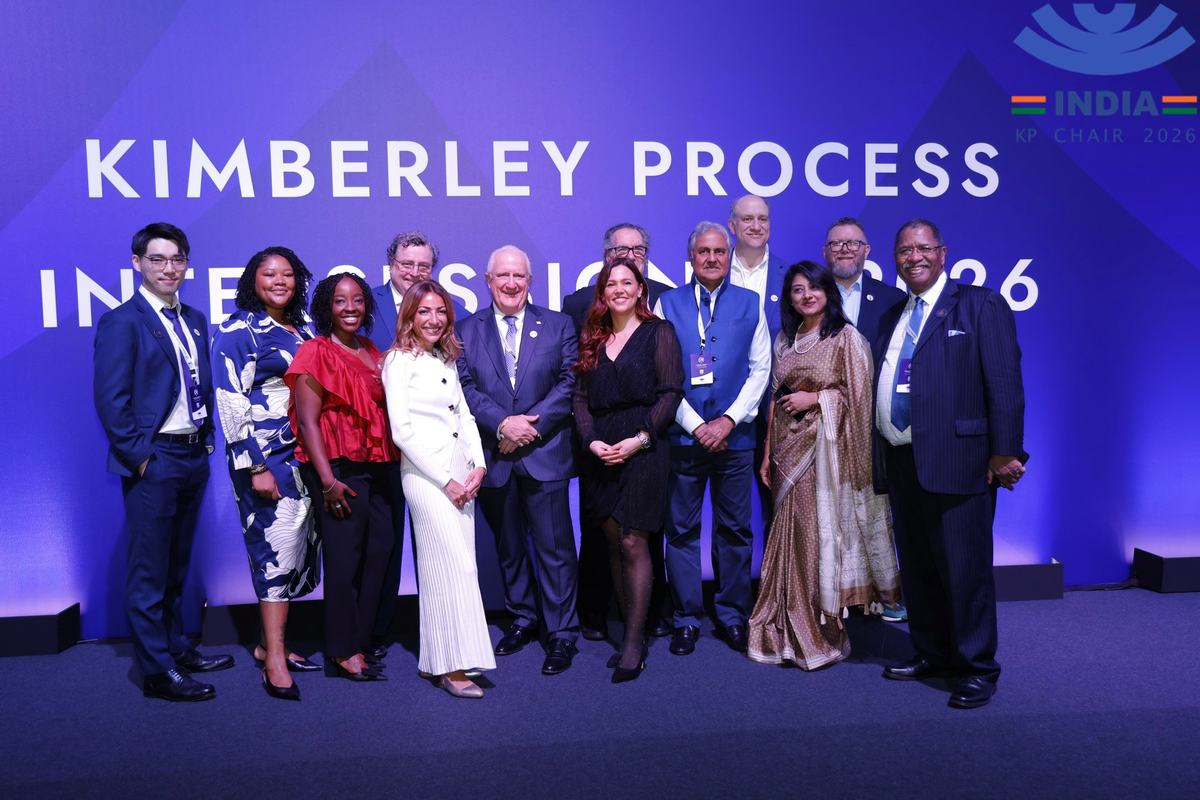
Established in 2000, the WDC was created to represent the diamond industry in the Kimberley Process, the international initiative established to prevent conflict diamonds from entering the legitimate trade.
Today, its work goes further. It addresses some of the most important challenges facing the natural diamond industry: responsible sourcing, international trade regulations, supply-chain integrity and consumer confidence.

The Kimberley Process
The certification scheme governing international trade in rough diamonds between participating countries, helping prevent conflict diamonds from entering the legitimate market.
The World Diamond Council
The industry’s representative at the Kimberley Process, sitting alongside governments and civil society organizations.
Section 02What it actually does
- It represents the diamond industry in the Kimberley Process.The WDC takes part in negotiations, helps improve the rules, addresses implementation challenges and advocates for reforms that make the system more effective. For diamond businesses, this means having an industry voice at the table when decisions affecting international rough diamond trade are discussed.
- It engages with governments on regulations affecting your business.New regulations, sanctions, import restrictions and trade requirements have direct consequences for diamond companies, whether they trade rough or polished. The WDC engages with governments and international bodies on matters such as the G7 and EU diamond import restrictions and traceability requirements — explaining how the supply chain actually operates, identifying practical challenges and advocating for workable solutions that protect legitimate trade without compromising integrity.
- It runs the System of Warranties.An industry self-regulation framework supporting responsible business practices throughout the supply chain. It builds on the Kimberley Process by extending responsible sourcing commitments beyond conflict diamonds to human rights, labour rights, anti-money laundering and anti-corruption. It is mandatory for members of the Bourse — section 03 sets out what it covers and how to register.
- It protects the reputation and future of natural diamonds.Confidence in natural diamonds depends not only on their beauty and value but on trust in how they are sourced and traded. The WDC works across the value chain to raise awareness of responsible sourcing, clarify the role of the Kimberley Process and promote a better understanding of the industry’s efforts to strengthen supply-chain integrity.
Section 03The System of Warranties
Operating the System of Warranties is mandatory for members of the Bourse. If you are not registered, register. If you are, the self-assessment has to be repeated every twelve months.
The WDC introduced the System of Warranties in January 2002 as a framework for industry self-regulation. In 2021 it was broadened beyond conflict diamonds to cover human and labour rights and to set out a position against corruption and money laundering. It is mandatory for WDC members, and the Bourse requires it of its own.
It applies to rough diamonds, polished diamonds and jewellery set with diamonds. The warranty goes on business-to-business invoices and memos, every time the goods change hands.
“The diamonds herein invoiced have been purchased [or sourced*] from legitimate sources not involved in funding conflict, in compliance with United Nations Resolutions and corresponding national laws [where the invoice is generated**]. The seller hereby guarantees that these diamonds are conflict free and confirms adherence to the WDC SoW Guidelines.”
How to register
- Create an account at wdcsow.org.The form asks for your name, email, mobile number, registered entity name and a password, and whether the account is single or group. No documents are required at this stage.
- Verify the account by email.The next screen sends a verification message to the address you registered.
- Complete the online self-assessment.The questionnaire is customised to your stage or stages of the value chain and the size of your company, so questions that do not apply to you are marked N/A. Businesses already compliant with the RJC Code of Practices or De Beers’ Best Business Practices are recognised automatically as meeting those minimum requirements. Explanatory notes sit beside each question.
- Keep what it gives you.On successful completion the system generates a PDF of your responses. Store it or print it — it can be shared with trading partners to show that you comply.
- Repeat it every twelve months.The self-assessment is an annual exercise, not a one-off registration.
The WDC’s System of Warranties helpdesk answers technical questions on the self-assessment: sow.helpdesk@worlddiamondcouncil.org, or +32 489 18 01 10, 10.00–16.00 Central European Time.
The Guidelines, the explanatory notes and a step-by-step walkthrough are in the resources section of the System of Warranties site.
Register, or sign in to complete this year’s self-assessment.
wdcsow.org →Section 04Why this matters to your business
Whether you are a manufacturer, dealer, broker or retailer, decisions made internationally can affect your business.
- A new import requirement can change the documentation you need.
- A change to Kimberley Process procedures can affect rough diamond shipments.
- Increasing expectations around responsible sourcing can change what your customers and trading partners ask of you.
The WDC works on these issues at the international level, helping ensure the industry’s practical realities are understood and its interests represented. Representing the industry effectively requires the participation of the businesses that make it work every day.
Section 05What membership offers
WDC membership is more than an expression of support. It offers practical opportunities to participate, contribute and stay informed.
- A voice in industry decisionsContribute your expertise to WDC discussions and committees, help shape priorities, and take part in the organization’s work on issues affecting the trade.
- Closer access to the Kimberley ProcessJoin the WDC’s Kimberley Process Task Force and participate in its work, with direct exposure to discussions involving governments, industry representatives and civil society.
- Information firstReceive WDC communications and updates on Kimberley Process developments and international issues affecting the diamond trade.
- Training and expertiseWDC training sessions on the Kimberley Process, the System of Warranties and the organization’s mission, including sessions for your employees.
- Connections across the industryEngage with representatives from mining, manufacturing, trading, retail and other sectors through WDC meetings, committees and international events.
- VisibilityBe listed on the WDC website, feature in WDC communications, and use the WDC member logo in your corporate materials, in accordance with membership guidelines.
- A route into the leadershipMembers are eligible to stand for election to the Board of Directors and to serve on WDC committees.
Section 06One industry, one collective voice
The WDC’s work benefits the entire natural diamond industry, but its ability to represent the trade depends on the strength and diversity of its membership.
Every part of the supply chain has different challenges and perspectives. Diamond traders in particular connect producing countries, manufacturers and markets, and their experience is essential to ensuring that international policies and responsible sourcing requirements reflect the realities of the trade.
Joining the WDC means helping shape the decisions that will affect your business and the future of natural diamonds.
Learn more about the WDC and how to become a member.
worlddiamondcouncil.org →Contact us
Should you require clarification or encounter difficulties relating to sanctions requirements, please contact the London Diamond Bourse for guidance and support. As an advocate for the UK diamond trade, the Bourse represents the interests of the industry and, where appropriate, can raise concerns on behalf of its members.
